The dairy industry has spent a ton of money and done a fantastic job of “educating” us to why we need to buy their product. The National Dairy Council sounds like a government agency, but it of course a professional trade group that is made up of the people who produce and distribute milk. So they have a vested interest in us believing that it is good for us. Their information is therefore suspect.
They tell us in the commercials they buy that “if you don’t get your three servings a day, then your bones will become brittle and break.” I would like to ask these people ,”Why do horses have strong bones?” They don’t eat yogurt, they eat green leaves (which are one of the best sources of calcium). Actually, every other animal on the planet goes dairy-free after infancy and their bones are just fine.
Humans are the only animal that have dairy after infancy; and it’s not all humans. It is mostly consumed in America and Europe. They don’t use much dairy in Asia nor in Africa. And by and large, they have stronger bones in Asia and Africa. But wait, that’s not what the commercials tell us.
Commercials tell us that dairy has calcium and that calcium is necessary for bone health. That is true. You know what other foods have calcium? All of them! Every fruit, vegetable, nut, bean, legume, root, leaf, meat, etc. Every food has calcium; dairy is the only one that bought commercial time to tell you. Dairy is also one of the few foods that takes more calcium away from you than it gives you.
The commercials tell you about the calcium, but it does not tell you about the casein. Casein is a milk protein that is highly acidic. Every acid that you pour into your body has to be neutralized, and the body’s natural base is Calcium Carbonate. Some of this is flowing in the blood; but after that gets exhausted, the body steals it from the bones. So dairy gives you one calcium and then takes two away. The parts of the world with the highest rates of milk and milk-product consumption have the highest rates of osteoporosis and hip fractures.
Over the past 70 years, there has been a concerted campaign to get people to drink more milk in the name of preventing osteoporosis. And it has been very successful. There are more people drinking more milk into later in life. But we have not seen osteoporosis rates fall at all. In fact, they have skyrocketed. Milk is not the only factor in this, but if it is supposed to be protecting u, it is not working.
The other problem with dairy is that it is a food designed by nature to GROW TISSUE. This is appropriate for infants as they A) need to grow a lot of tissue in a hurry and B) have the digestive enzymes necessary to turn this rich and viscous material into usable tissue. By the time we have our teeth, we don’t need it anymore. Most mothers who breastfed long enough will agree that teeth are nature’s way of telling us that it’s time to wean. In a non-infant, the tissue that dairy turns into is phlegm; which can manifest many different ways. It can show up as: Sinus congestion; post-nasal drip; wheezing and asthma; and mental fog It can lodge between the skin and muscles as fat. Kids get a lot of dairy these days and that could be a contributing factor in the explosion of childhood obesity. This is true with normal, unadulterated milk; but is likely much worse when juiced with growth hormones. Phlegm can also congeal to form cysts, fibroids, and tumors. The Chinese understand cancer and these other types of abnormal growths as being basically phlegm-balls and noticed more in the populations that consumed dairy. Recent research is showing that casein is carcinogenic and is implicated in a whole host of auto-immune diseases. For more on this, read “The China Study” by T. Colin Campbell, a PhD nutritional biochemist. You would think that evidence that dairy causes health problems would be on the front page of newspapers, but the billions of dollars at stake have prevented most of us from ever hearing about it.
I advocate The Asian Diet, which states that most things are fine in moderation. This is true for dairy as well. You can eat and drink all the things you like. You just need to keep them in the proper proportion. And the best proportion for you and your children (except infants) is to have in rarely.
Thursday, June 30, 2011

Friday, June 17, 2011
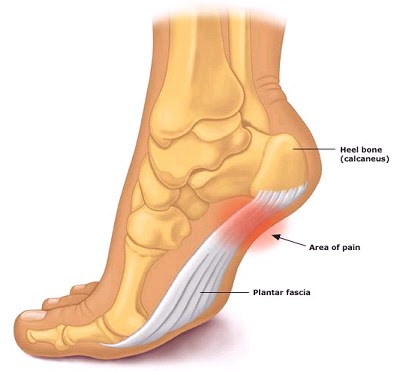
Now that we are into our warmer weather, many of us will take up running outside. One of the common discomforts that can arise with running, indoors and outdoors, is plantar fasciitis. It is the most common cause of heel pain. The plantar fascia is the flat band of tissue (ligament) that connects the heel bone to the toes. It supports the arch of the foot. If the plantar fascia becomes strained, it can weaken, become swollen, and inflamed. This can result in pain in the heel or in the bottom of the foot while standing or walking. It can happen in one foot or both feet.
Plantar fasciitis is caused by straining the ligament that supports the arch. Plantar fasciitis most often occurs because of injuries that have happened over time. Repeated strain can cause tiny tears in the ligament. These can lead to pain and swelling. There are many causes that can lead to this: excessive pronation which is rolling the feet inward while walking; having high arches or flat feet; walking, standing, or running on hard surfaces for a long period of time; wearing unsupportive shoes; and having a tight Achilles tendon. Another common cause of plantar fasciitis is arthritis. Certain types of arthritis can cause inflammation to develop in tendons, resulting in plantar fasciitis. This cause is particularly common among elderly patients. Some patients with plantar fasciitis also have a heel spur, which is an abnormal growth of the heel bone. The heel spur is not the cause of the plantar fasciitis but may coincide with it and cause further pain already induced from the plantar fasciitis.
One of the most common complaints associated with plantar fasciitis is a burning, stabbing, or aching pain in the heel. This discomfort is more apparent in the morning upon waking because the fascia ligament tightens up during the night while sleeping, causing pain to diminish. Although, after rising out of bed and placing pressure on the ligament, it becomes tight and pain is particularly acute. This pain will usually decrease as the tissue warms up, but may easily return again after long periods of standing or weight bearing, physical activity, or after getting up after long periods of lethargy or sitting down.
There are several options for treatment in Western medicine. They include giving the foot a rest bycutting back on activities that increase the pain; avoid walking or running on hard surfaces; icing the heel; using over-the-counter pain relievers; doing calf stretches (especially when first waking in the morning); using a shoe with good arch support and a cushioned sole; using heel cups or shoe inserts (orthotics). If these treatments do not help, the doctor may suggest splints to wear at night, steroid shots into the heel, or other treatments. Surgery is usually only suggested if the pain has not subsided after trying other treatments for 6 to 12 months.
Traditional Chinese Medicine (TCM) is a great way to treat the symptoms associated with plantar fasciitis. There are several modalities used to treat the pain associated with plantar fasciitis. These include acupuncture, moxibustion, and Chinese herbs. All of these are helpful to relieve the pain and inflammation.
Acupuncture is a treatment of using fine, thin needles placed in specific acu-points along the meridians of the body. The meridians are the pathways that the qi (energy) runs throughout the body. If the qi becomes blocked along the meridians, many symptoms can arise-such as pain, insomnia, digestive issues, and many other ailments. Acupuncture, and all TCM therapies, balance this qi and keep it in check-which results in health and harmony throughout the body. The acupuncture needles are placed in various parts of the body and not always necessarily where the symptom is-especially with pain. A diagnosis is made to see where the imbalance of qi is and then that specific meridian is treated. For example, plantar fasciitis pain is in the heel of the foot and the “Kidney” meridian is one of the meridians which runs along the heel of the foot. So, there may be an imbalance within the “Kidney” meridian therefore, the needles may be placed along the Kidney channel which runs up the leg and into the torso. So the needles may be placed in distal areas and will still being relief from the pain.

Chinese herbs are a wonderful therapy to use for all kinds of pain in the body, including plantar fasciitis. Chinese herbs come in different forms: teas, tablets, tinctures, granules, and powders. They are powerful medicinals that are safe to use with most medications without interfering. Plantar fasciitis includes inflammation of the tissue which is thought of as a “warm” type of pathogen in TCM. Herbs that can help to cool the inflammation and nourish the muscle itself may be recommended to alleviate the heel pain. Specific herbs are also recommended in helping to nourish the blood, as the moxibustion does, but the Chinese herbs are used internally and have a stronger effect. Also, Chinese herbs are helpful in relieving arthritis, which can cause plantar fasciitis pain.
Pain is a symptom that is easily alleviated with TCM and usually results in decreased pain within the first few sessions. Treatment plans vary from patient to patient, depending on their degree of pain, how long they have had the pain, the amount of activity they are involved in, and many other factors. Once the pain symptoms are alleviated, then TCM therapies are used as a maintenance and preventative medicine to keep the plantar fasciitis in check-which leads to a continual flow of balance and harmony of qi throughout the mind, body, and spirit.
Caroline Jung, Dipl. Ac., MSOM
Friday, May 20, 2011
Tune-Up with Acupuncture for Summertime
Summertime is right around the corner for us here in Chicago-finally! We do not seem to have too much of a spring so we usually jump right into summer. Although it may feel like we are still in the winter mode-our muscles may not be as flexible as in the summertime, we may still have the desire to sleep in longer and take naps. So, to help our bodies and souls along with being ready for the change in temperature and environment, we can use Traditional Chinese Medicine (TCM) to prepare ourselves.
We use acupuncture to tune-up the different meridians in our bodies. The meridians are the pathways that carry our qi (our energy) throughout our bodies. Acupuncture points are on each of the meridians. We decide on and choose the points according to any symptom a patient may present with. Although, when we want to just have a treatment to prepare ourselves for a change in the seasons, we choose points according to the meridians associated with the five elements: fire, water, metal, earth, and wood. These five elements also correspond to the four seasons of the year. The specific points help support all of the systems in our bodies to keep us at our optimal health level. For example, for the heat of summertime, we can focus on the heart meridian which is associated with the fire element. By keeping this meridian and its’ energies in check, we can help our odiesto stay cool while working and playing in the heat.


By paying close attention to each meridian associated with each season, we can prevent that energy from becoming affected by pathogens and turning into an illness. TCM can be used in this way as a preventative and maintenance medicine for our health.
Another nice treatment to help prepare for the warmer months is a cupping treatment. Cupping is a treatment using cups, either glass or plastic, to remove toxins and stagnation from our body.

It is easy for our bodies to build up toxins during the winter because cold environments allow for our everyday body functions to slow down. Cold temperatures also make our muscles tighter and they tend to contract more easily. These toxins can create stagnations of energy which results in areas of the body to have too much energy and others areas not having enough. Cupping can release these toxins and allow for a harmonious flow of qi. Cupping is also effective in relieving pain and discomfort-as we often use it to treat back pain.
From a nutritional aspect of TCM, we want to balance our energy with cooler foods and liquids. During the warmer seasons, we can have more of the raw, cold foods such as salads and sushi. This is not to say that we should not have hot tea during the summer, we just do not want to overheat our systems. We are always looking at the yin and yang of foods and how they will affect the yin and yang of our individual bodies and spirits. If we take everything in moderation, our immune and digestive systems will function at their best.
Here is a light and easy recipe for the warmer months:
Summer salad
¼ cup arugula
¼ cup spinach
¼ baby greens
1/8 cup sliced, raw radish
¼ cup avocado¼ dried fruit, such as cranberries or blueberries
¼ cup adzuki beans
¼ cup pistachios
¼ cup spinach
¼ baby greens
1/8 cup sliced, raw radish
¼ cup avocado¼ dried fruit, such as cranberries or blueberries
¼ cup adzuki beans
¼ cup pistachios
Dressing: mix 3 parts olive or sesame oil with 1 part rice vinegar; add a touch of fresh squeezed orange juice, sprinkle of sea salt, pinch of black pepper, and rosemary until the flavors blend well. Shake all ingredients together and let stand for 10 minutes.
Lightly dress the arugula, spinach, and baby greens with the dressing and top the salad with remaining ingredients.
Caroline Jung, Dipl. Ac., MSOM
Thursday, May 12, 2011
Fertility Boot Camp a huge success

We had great presentations from Reproductive Endocrinologist Eve Feinberg, Urologist Laurence Levine, our own Ob/Gyn's Jamil and Idries Abdul-Rahmen Ra, and our own own acupuncturists Jeanie Bussell, Caroline Jung, and Jason Bussell.
The feedback from participants was great. And so far, attendees of our Fertility Boot Camps have been getting pregnant at an astounding rate. If you are having trouble conceiving, don't wait until the next Boot Camp. Come in and see Fertility-Expert Jeanie Bussell and her staff to get your body as prepared as possible. And then when Boot Camp comes around again, be sure to register early.
Sunday, April 17, 2011

Meditation to Enhance Fertility
Meditation is an ancient old form of relaxation and healing. It is a breathing technique and practice to calm the mind and develop inner peace. It has been proven to reduce stress, eliminate pain, and it has many other wonderful effects. In our modern day of self-healing and various therapies, meditation and its health benefits are more often being recognized and appreciated. Meditation is continued and extended thought. It involves contemplation and reflection. It is a personal practice that grows and develops for each of us over time. Meditation is so effective because it slows down our brain waves. By doing this, we can experience deep relaxation.
So, if meditation is about relaxing and slowing down the body’s processes, how does it enhance and affect fertility?
It does so by in many different ways. When we look at the body from an energetic viewpoint, any internal or external factor that induces stress can cause stagnation or deficiency of energy. In Chinese medicine terms, our life energy that runs through our body is called our “qi”. Our qi can easily be affected by emotional changes and physical changes. These changes can cause our qi to become stagnant or deficient. When this happens, it directly affects our organs, tissues, circulation, and all physiological processes. This also includes hormonal imbalances which are associated with fertility issues. Fertility issues, for women and men, can be caused by hormonal imbalances, abnormal physiological structures, and many other factors. But even with a physical disorder (according to a Western medical diagnosis for fertility), the qi is directly involved. The qi in our bodies allows for the smooth movement of the energy and the flexibility and health of our muscles and tissues. Our reproductive organs are exactly that. So when we have smooth flow of qi through the body, we also will have adequate blood flow to the reproductive organs. This healthy flow of blood is essential for reproduction, for example, such as a thick endometrial lining and normal sperm production.
Another important effect meditation has on fertility is it allows us to go into deep relaxation, which is helpful in having adequate and quality sleep. By doing meditation during the day or at night just before bedtime, it helps our mind, body, and spirit to able to calm down and fall asleep easily when we are ready to at the end of our day. This is essential to our health as our “yin” energy is active at night while we are asleep. Our yin energy is responsible for the housekeeping duties that go on during the nighttime-detoxification, cell regeneration, etc. Also, the yin energy is associated with our estrogen so it is crucial that we allow for our yin energy to have the rest is needs during the nighttime hours to support and balance all of our hormones.
When we meditate, we allow our minds to become clear and calm-clear of all of our thoughts. This clearness we create in our minds allows for all parts and systems of our bodies to slow down, such as our heart. When our heart slows down, so does our heart rate and blood pressure. This allows for our blood to efficiently flow to all of our organs and to nourish all of our cells. In the end, this can allow for increased blood flow to our reproductive organs which can increase our fertility.
When we meditate, we create the opportunity to find the quiet and peaceful parts of our mind, body, and spirit. These three parts in each of us are all connected and change when one of the other parts change. We all have the gentle point in ourselves that we can tap into at anytime, anywhere-this is where meditation comes in.
Meditation is a life-long practice that you can benefit from greatly by reflecting on your experience and thoughts of your day. We shall quiet our thoughts; the silence behind our thoughts is the awareness we have of ourselves and desires. Meditation allows us to tap into this silence and enlighten our lives!
Caroline Jung, L.Ac., MSOM, Dipl. Ac.
Please join us every Wednesday at TKI for our free meditation sessions! 12:30-1pm on the 2nd floor-no RSVP required.
Please join us every Wednesday at TKI for our free meditation sessions! 12:30-1pm on the 2nd floor-no RSVP required.
Tuesday, April 5, 2011
Acupuncture no better than placebo???

There is a fundamental incompatibility with using Western methods to evaluate Eastern techniques. In the West, the gold-standard of research is the Randomized, Controlled,double-blind Trial (RCT). In this design, subjects are randomly assigned to either a treatment group or a control group that receives either no treatment or a placebo. There are concerns that if patients know that they are receiving the real treatment, that this expectation could alter their response (they think they should be getting better and therefore do get better, independent of the treatment they receive). This is why the patients are blinded- that is they don't know whether or not they are receiving the real treatment. And the subjects in the control group do not know that they are not receiving a real treatment. There is also concern about the influence that the treatment provider can have if he or she knows who is receiving the real treatment vs. placebo. If I know you are getting the real treatment, I may treat you differently somehow and that could alter your response. For this reason, the one providing the treatment is also blinded. This is what they mean by a double-blind study. Both the person receiving the treatment and the one administering the treatment do not know who is getting the real thing and who is getting placebo. This design works best for pills. It is arguably impossible to use this model for acupuncture research.
But the RCT not the only way to determine something's effectiveness. I have read skeptic columns who assert that the lack of RCT evidence is PROOF that acupuncture does not work by anything more than placebo. My response to this is, "Can someone show me the RCT that show's that hip replacements work? If not, then any benefit that the patients experience must be due to expectations." Think about it; it is impossible for a surgeon to do the procedure and not know whether or not she performed the real replacement. Hip replacements have helped a lot of people and we don't need an RCT to prove it.
I find the placebo argument amusing. Although the number of skeptics has dropped significantly over the past 15 years (with the Mayo Clinic, John Hopkins, the World Health Organization, the National Institute of Health, and the American Medical Association all concluding that acupuncture DOES work), there are still a few die-hard skeptics that insist that acupuncture only works as a placebo. Most patients do not come to acupuncture as a first-line approach to a problem. For low back pain, a lot of my patients will start with over-the-counter medication, then see a physician, then physical therapy, then a chiropractor, and then finally come to see us. And then 90% of our back pain patients experience relief. For the placebo hypothesis to hold up, that patient must have had no faith that medication, Western orthopedics, physical therapy NOR chiropractic could possibly help them. But for some reason, they were sure that the acupuncture (their fifth choice) would be effective. I'm confident you see the flaws in that logic. Why do acupuncturists give the best placebo? If it is truly that we take more time with our patients and that alone truly improves patient outcomes, then don't all physicians then have the obligation to provide this "placebo" care?
Another argument against the placebo hypothesis regards animal acupuncture. There are points that, when stimulated, produce measurable changes in animal physiology. For example, there are points that will increase the t-cell counts of rats. Even skeptical rats experience this improvement. The camel at the Brookfield Zoo in Chicago had an arthritic hip a few years ago and could not run. She was treated with acupuncture and was soon running again. This story was covered in the Chicago Tribune and the WGN news. Again, this was a skeptical camel. http://articles.
But there are studies out there with headlines that read, "Acupuncture no better than placebo". First let's talk about what is placebo acupuncture. In fact, it does not exist. One method that researchers (usually MD's and not acupuncturists) use is called "Sham Acupuncture" where they pretend to put a needle into an acupoint but do not insert it all the way. Traditional Chinese Medicine acupuncture typically inserts needles, but not all forms of acupuncture do. Japanese style frequently uses this superficial technique and get great results.
The other method of "placebo" acupuncture is to do traditional needling at points other than the main acupuncture points, which I will call "wrong point" acupuncture. There is no spot on the body that is energetically inert. Every point will fall within an acupuncture meridian's path and inserting a needle there will affect the physiology. There was one study I read that found that "real acupuncture" was 50% effective in treating back pain, "wrong point" acupuncture was 40% effective, and standard Western care was 13% effective. The conclusion: Acupuncture does not work, because real acupuncture was not significantly more effective than "placebo". My take on this data is: one set of points helps 40% of people, another set of points helps 50%, and both are more effective than Western care. This is like saying Vicodin doesn't work because it was not significantly more effective than Ibuprofen. What they call "placebo" is not a true placebo.
And lastly, a big problem is that the RCT treats everyone the same. Chinese medicine treats everyone individually. If I have to treat everyone the same in a study, I am not practicing Chinese medicine and the results say nothing about Chinese Medicine's effectiveness. If the study does not show benefit, then the conclusion is: "This set of points does not work for everyone". And every acupuncturist already knows that using the same points for everyone will not be effective.
So don't worry about the studies that try to discredit acupuncture. For some reason, most of the literature that is arging against acupuncture is coming from the UK lately. There seems to be a real campaign to deter people from using natural (translated - affordable) remedies. Believe in the Billions of people who know first-hand that it does work. Of course it does not work for everyone, nothing does. But it's safe, effective, and should be our first line of defense. If it doesn't help, then you can proceed to the newer, less-studied, and riskier pharmaceutical and surgical interventions.
--
Jason Bussell MSOM, L.Ac
President Emeritus - IL Assn of Acupuncture and Oriental Medicine
Tuesday, March 29, 2011
Ten Simple Ways to Improve Your Health This Spring

The dramatic shift from the deep freeze of winter into the drama and glory of spring is an incredible thing to behold. If it weren’t for spring, many of us Chicagoans would be somewhere else sitting under a palm tree sipping a cool drink and slapping on the sunscreen.
In Chinese medicine, the season of spring is aptly associated with the elemental energy of wood. While many people think of wood as the hardwood logs that you throw on the fire, those tender green shoots poking out of the ground are also elemental wood.
The wood element and spring also relate to the Chinese organ system of the Liver. Responsible for the free flow of everything in your body, your Liver is prone to blockages—both physical and emotional. In fact, when you’re deeply frustrated or angry, your Chinese Liver is compromised; basically things aren’t moving as smoothly as they should. (Same goes for menstrual cramps, digestive problems, some headaches, and constipation—it’s all about flow.)
So, in honor of spring and all manner of couch spuds heading outdoors, here’s my top ten ways to be a little healthier this spring:
1) Eat more sprouts, shoots, and greens. Remember, those baby plants are chlorophyll-rich manifestations of the wood element. And they’re really good for you.
2) Start a garden. Whether you grow some lettuce in pots on your balcony or convert part of your back yard into a pumpkin patch, gardening is good for your soul. In addition, it can be a cost-effective way to get pesticide-free produce on your table this spring and summer.
3) Get your eyes checked. While this may seem unrelated to anything, your Chinese Liver is actually responsible for the health of your eyes. So take care of them this spring by getting your vision checked.
4) Commit to being a little more flexible. Wood is healthy when it’s strong, yet bendable. Inflexible wood will quickly break when it’s stressed. Likewise, flexible people are better able to handle stress and take life’s bumps and bruises in stride. If you struggle to deal what life dishes out, give a little, like branches in the breeze.
5) Get moving. Spring, the wood element, and your Liver are all about flow and movement. Get off the couch and get the sap going in your veins. Take a walk, play outside, ride your bike. Whatever you do, a little movement will wake you up and make you feel good.
6) Go outside. Get in touch with the natural world around you. Be a witness to the incredible changes this season brings. Much of Chinese medicine is based on the cycles of nature, and those cycles are most apparent in the spring.
7) Take care of your Liver. Um…how? Eat foods that closely resemble their original state. (E.g. eat raspberries, not a raspberry-filled jelly doughnut.) Take a little break from adult beverages. Skip highly processed foods and foods with very long ingredient lists. It will feel like a mini detox.
8) Stretch. The Chinese Liver also governs the health of your tendons and ligaments. Avoid injury while you’re performing Item #5 above by stretching a little. Massage is also a good way to get the circulation going in your muscles, ligaments, and tendons.
9) Eat darkly colored foods to enrich Liver blood. Black beans, eggplant, greens, blueberries, spinach, peppers, beets, etc. You get the picture.
10) Start something new. Spring is a time of growth and expansiveness. By starting a new project, hobby, skill, job or relationship, you’re creating movement, change, and growth that are the essence of this time of year.
Nanci Bankier L.Ac, Dipl. OM, MSTOM
Subscribe to:
Posts (Atom)