Wednesday, October 19, 2011

TCM for treating side effects of Breast Cancer Treatment


We have so much information circulating online, in newspapers, and the media alike right now to honor October as Breast Cancer Awareness month. So much wonderful information is here for us to educate ourselves about breast cancer and how it affects our lives. Along with looking at breast cancer: what it is, what causes it, how it is treated, we can also look at the treatments themselves that are used for breast cancer. Obviously, the treatments are used and indicated to treat the cancer itself, but what else do these therapies do to our bodies? Our emotions? How can Traditional Chinese Medicine (TCM) play a role in helping us adjust to these treatments?


TCM encompasses a variety of modalities including acupuncture, Chinese herbs, moxibustion, cupping, and gua sha. We use all of these different techniques to treat all illnesses and symptoms. All of these are used to reach the same result: to balance and harmonize the qi in our bodies. Our “qi” is the energy that flows through the channels in our bodies. When the flow of our qi is interrupted, then symptoms may arise. Using TCM therapies, our qi is able to move smoothly throughout our entire bodies and is able to nourish our organs, balance our hormones, and support all of our systems-digestive, immune, and all of our other systems.

Depending on which type of breast cancer is to be treated is a part of the deciding factor of which treatment may be chosen for each individual. Along with the type of breast cancer, other factors may be involved as well-age, constitution, and a patient’s personal decision. There are many breast cancer treatments available:
  • Surgery
  • Chemotherapy
  • Radiation
  • Hormone Therapy
  • Targeted Therapy

These traditional therapies are advanced and have saved so many lives. In our modern day of medicine, we are fortunate that they allow for so many to enjoy their lives after recovery.

TCM can help with some of the side effects from the above listed treatments. The way TCM does this is by supporting and nourishing whichever part of the body that is directly affected by the treatment. These are some ways that TCM can help with these therapies:
  • Surgery-Chinese herbs and moxibustion can help nourish the skin and tissue that has undergone the surgery and help circulate blood and nutrients throughout the body for a speedy and more comfortable recovery.
  • Chemotherapy-acupuncture can help ease the nausea by nourishing and supporting the digestive system that is affected from the chemotherapy.
  • Radiation-acupuncture and Chinese herbs can help ease the fatigue from the radiation-the physical and emotional fatigue that radiation therapy can take on our systems.
  • Hormone Therapy-acupuncture can ease the side effects, such as hot flashes, of Tamoxifen, a common hormone therapy used for breast cancer patients.
  • Targeted Therapy-Herceptin is a common drug used in targeted therapy. Acupuncture is helpful in eliminating the side effects of it such as sinus pain and sore throat.

Along with helping ease the physical discomforts from traditional treatments, TCM also helps to nourish our spirit as well. With a diagnosis of any serious illness, of ourselves or a loved one, it can take a toll on our minds and spirits, as well as our physical bodies. Acupuncture can help ease these emotions as the channels of energy in our bodies are not only associated with the physical parts of us but also our many emotions. When our spirit and soul is at peace, it makes for an easier process for our physical body to heal as well.

One of the beauties of TCM is that is easily integrated with traditional Western medicine therapies without interfering with that the traditional treatment is aiming to do. The two medicines work in harmony together to bring health and happiness to all of us.

Please take a moment to read this article discussing the benefits of acupuncture for the side effects from conventional medicines and therapies used for breast cancer:
http://abcnews.go.com/Health/story?id=5860681&page=1

Caroline Jung, LAc., MSOM

Wednesday, October 5, 2011

Fertility/Pregnancy Blog Series

Over the next few months, our focus on our blog will be fertility and pregnancy. We will be writing a series on the fertility aspect, discussing fertility issues and treatments for them and follow with blogs discussing pregnancy, throughout the nine months and post-partum care. We will be writing from a Traditional Chinese Medicine (TCM) perspective, along with bringing in Western medicine aspect of these topics.

This first blog will begin with an overview of fertility and infertility with the following blog going into more detail about fertility, infertility, and treatments.
Our reproductive system is an amazing part of our physiology. To study the details of how it works is fascinating! There are so many intricate details that happen so many times each day that allow for our normal reproduction and optimal health. Closely tied to our reproductive system is our endocrine system, which is relied on for the regulation of hormones to allow for menstruation, conception, and many other functions.

Fertility is a broad subject that includes many pieces to it-not only conception. We have so many processes leading up to conception-for both women and men. All of these processes depend on so many things-lifestyle, age, physiology, and many more. Each individual woman and man going through any fertility issue may have one or numerous factors to consider. Our present day health and medical communities offer many practitioners to help with moving through any fertility issue. Also, there is also the option for preparing our bodies and relationships for conception-for some time before even trying to conceive.  By using all resources, it makes learning about fertility and pregnancy a much easier road.


Kokopelli-A Fertility God
                                                                           
Fertility is defined as the natural capability of giving life. Infertility, for a woman, is defined as a medical condition when a woman under the age of the 35 has not conceived after having unprotected intercourse for a year. For a woman over the age of 35, it is not having conceived for at least 6 months with unprotected intercourse. Infertility for a man is defined as not being able to conceive with a fertile woman, possibly due to several factors.
From a female standpoint, and for couples as well, understanding the menstrual cycle is a good place to start to see where possibilities may come up for infertility issues. The menstrual cycle is a series of physiological changes that a woman’s body goes through in preparation for conception and pregnancy. Once a month, the uterus develops a new endometrium (the uterine lining) to prepare for a pregnancy. The endometrium is the site of implantation of a fertilized egg in the uterus. In any given month, if there is not a fertilized egg to signal for implantation to occur, then the endometrium begins to shed--this process is known as menstruation. Menstruation is the shedding of the uterine lining which is the menstrual bleeding that occurs for women beginning in their teenage years up until menopause. A menstrual cycle includes four phases:

·      Menstrual phase: usually lasts about 5-7 days at the beginning of each cycle; shedding of uterine lining
·      Follicular phase: usually lasts about 7 days just after menstruation; production of estrogen to nourish and support follicle growth for the maturing egg
·      Ovulation: a surge of luteinizing hormone to signal to the follicle to release the egg, normally cycle day 14
·      Luteal phase: usually lasts about 12-14 days after ovulation; development of the corpus luteum from the ruptured follicle; progesterone and estrogen are produced to support a pregnancy or the hormones can begin to decline and the menstrual cycle starts over again


When we look at the menstrual cycle from a TCM point of view, we are paying attention to the yin and yang aspects of the cycle. We would like to make an important point here, along with examining the menstrual cycle from a TCM perspective, we also take into account the hormone levels, menstrual bleeding, and all aspects of all four phases.  By looking at the yin and yang of the cycle and the symptoms and changes that may arise for each individual woman, we can make a diagnosis of where the root of a disorder is and how it can be treated. Yin and yang are two aspects of each individual we look at and take into account when making a diagnosis and treatment for a patient. Yin and yang represent the foundational energy of the body—the hot and cold, the feminine and masculine, and many other fundamental characteristics. The yin and yang are also associated with various hormones in the body. Yin has more “estrogen-like” qualities while yang has more “testosterone-like” qualities. The following is a TCM view of the menstrual cycle:
·      Menstrual phase: loss of the blood, qi, and yin of the body
·      Follicular phase: replenishing of blood, qi and yin; build these aspects of the mind, body, spirit back to normal levels to allow for ovulation
·      Ovulation: shifting from yin to yang energy, allowing for timely ovulation
·      Luteal: a rising of the yang energy

When we look at a woman’s symptoms, for example, if she has an early ovulation day, then we may look closely at the amount of yin she has and nourish the yin to support ovulation for the next cycle. We can determine an excess or deficiency of the yin by asking questions about digestion, sleep patterns, and many other detailed questions about a woman’s lifestyle. By closely examining the fluctuations throughout any given menstrual cycle, we can determine which hormones may be out of balance. This can help to draw a conclusion of what a disorder may be and where it is stemming from. All female disorders will have some yin or yang imbalance along with some qi and blood imbalance. These are the cornerstones that make up the human body and the functions of the body and all of its’ systems.

Outside of a normal menstrual cycle, many issues and disorders may arise. These include irregular menses, dysmenorrhea, menstrual migraines, fibroids, infertility, endometriosis (please see our blog from March 22, 2011 for details on endometriosis), PCOS (please see our blog from September 11, 2011 for details), PID, menopause, and many other issues. Each disorder has many causes, symptoms, and treatments. We will go into more detail on each of these disorders throughout this series of the blog.

Caroline Jung, Dipl. Ac., MSOM

Sunday, September 11, 2011

PCOS


September is PCOS Awareness Month. To help us all become more aware of this disorder, I am writing about what it is and  how we use Traditional Chinese Medicine (TCM) to treat it.
To begin, I am going to explain PCOS, which can be a mysterious disorder to us because it does not have a definitive cause. PCOS is polycystic ovarian syndrome, which is a hormonal disorder that can cause a variety of symptoms for women. The symptoms include hirsutism (excessive hair growth on the face, chest, abdomen), hair loss (“male baldness” pattern), acne, polycystic ovaries, obesity, and infertility. Most often, symptoms first appear during adolescence, around the start of menstruation. However, some women do not develop symptoms until they are into their 20's. PCOS is the most common hormonal problem for women of childbearing age, affecting 5-10% of women during this time in life. Although PCOS presents early in life, it persists through and beyond a woman’s reproductive years.

Along with the symptoms mentioned above, PCOS can lead to other health issues later in life such as insulin resistance, diabetes, sleep apnea, heart disease, and endometrial cancer. A PCOS presentation can vary from woman to woman so it can be difficult to universally define it. Although, it is clear that all women affected with PCOS do have irregular and unpredictable ovulation patterns. It is also clear they produce excess amounts of androgens (testosterone). The hormone imbalance seen with PCOS includes several hormones, FSH (Follicle-stimulating hormone), LH (Luteinizing hormone), thyroid, and androgens (testosterone). It is not yet completely understood why or how the changes in the hormone levels occur. PCOS develops when the ovaries overproduce the androgens. An overproduction of androgens can result from an overproduction of LH, which is produced by the pituitary gland.
Although, it is not completely understood what exactly causes PCOS, there are a few key factors that can play a role:
·         Excess insulin
·         Low-grade inflammation
·         Heredity
·         Abnormal fetal development
Testing used to determine PCOS include physical exam, pelvic ultrasound, and bloodwork. Treatment for PCOS include medications to help regulate the menstrual cycle and ovulation, reduce excessive hair growth, and surgery is sometimes as option as well.

When we look at PCOS from a Traditional Chinese Medicine (TCM) perspective, we look at where the energetic “qi” imbalance is stemming from. This is how we form a diagnosis and treatment plan. In TCM, disorder arises from excess and deficiency of the qi in our bodies. Our qi  runs through the energy channels along our bodies. PCOS can result from imbalances in various channels:
·         Our kidney channel, which can have a “yang” deficiency
·         Our spleen channel, which will have more of a excess of damp pathogen
·         Our liver channel, which can have a blood stasis pattern
These energy imbalances can be seen as cystic ovaries, irregular menses, infertility, hirsutism, and abdominal discomfort.
Once we have determined where the imbalances of qi are, we can create a treatment plan. PCOS is effectively treated by using a variety of therapies. These include:
·         Acupuncture
·         Chinese herbs
·         Supplements
·         Regular exercise
·         Specific food plans
·         Adequate, quality rest
·         Meditation

Acupuncture and Chinese herbs work in similar fashion to treat PCOS and all of its symptoms. By using acupuncture and herbs to balance the qi that is affected by PCOS, these treatments will help to regulate the hormones that are out of balance with a PCOS presentation.
A study published in 2008 demonstrates the effectiveness of electro-acupuncture and exercise on PCOS. The study results showed a difference in adipose levels and insulin resistance after using electro-acupuncture and exercise together. You can read more about this study at:
A typical TCM treatment plan for PCOS may include weekly acupuncture treatments for several months or even longer. It depends on each individual patient, her specific symptoms, how long she has been affected by PCOS, and other factors as well. We have seen wonderful results with using acupuncture and herbs to treat PCOS by helping to regulate the hormones—a healthy and happy mind, body, and spirit!
Caroline Jung, Dipl. Ac., MSOM

Tuesday, July 19, 2011

Nutrition-A Traditional Chinese Medicine Perspective


In Traditional Chinese Medicine, one of the main aspects of health we look at closely is an individual’s food lifestyle. This is an important for our overall health and sense of well-being. From a Chinese nutritional perspective, we look at many aspects of foods to decide on which ones are best for us. This is based on the yin/yang theory and the TCM (Traditional Chinese Medicine) diagnosis that we make for an individual. In comparison to a traditional food pyramid recommendation, which is usually based on protein, carbohydrates, and fats, from a TCM perspective, we look at the individual we are treating and many aspects at the time of treatment. Some of the aspects that we make our recommendations based on are:
 
·         The yin and yang balance of an individual
·         The age and constitution of an individual
·         The yin and yang of each food we are recommending
·         The season of the year


These aspects are important to make sure we are balancing all parts of the body, mind, and spirit.
By looking at the yin and yang of an individual, we are addressing the movement of qi (energy) and fluids in the body. The yin and yang also illustrates an excess or deficiency of energy in the body. Yin and yang levels also indicate the level of hot or cold in an individual. By being aware of one’s body temperature, we can be more certain as to not create in an imbalance in their body. For example, by recommending cold foods to someone who has a “cold” presentation, showing cold hands and feet and slow digestion, would only exacerbate their symptoms and further slow digestion. This awareness of hot and cold is an important yin/yang aspect of a food as well because all foods have yin/yang in them. So we want to balance specific foods to create harmony in the digestive system.
An individual’s age makes a difference in the entire digestive system which can also be affected by other aspects of health. For an older individual, we may recommend to use spicy foods sparingly as to not upset the delicate intestinal tract that we tend to see in older individuals. We also take into account the season of the year, the climate that we are in. This idea goes along with keeping in mind the hot/cold nature of a food. If we are consistently in a cold, damp environment, this allows for slow movement of nourishment in the body-which can lead to energy stagnation and depletion. Also, we should be eating the foods that are grown in each season. We are closely connected to nature and the bountiful Earth we live on so it only makes sense that we take in the foods that Mother Earth gives to us throughout the seasons.
In all cases, no matter your choice of food lifestyle, it is also essential to have what your body is telling you it needs. There is always a reason behind the craving your body has and in order to satisfy it, physically, socially, and emotionally, within moderation, then we should stay in alignment with our systems’ desires and needs.
By keeping all of this in mind when making food recommendations, we can make a holistic choice for our mind, body, and spirit which will bring about health and harmony!
Caroline Jung, Dipl. Ac., MSOM


Thursday, June 30, 2011

You love your children so you give them milk right? Wrong!

The dairy industry has spent a ton of money and done a fantastic job of “educating” us to why we need to buy their product.  The National Dairy Council sounds like a government agency, but it of course a professional trade group that is made up of the people who produce and distribute milk.  So they have a vested interest in us believing that it is good for us.  Their information is therefore suspect.

They tell us in the commercials they buy that “if you don’t get your three servings a day, then your bones will become brittle and break.”  I would like to ask these people ,”Why do horses have strong bones?”  They don’t eat yogurt, they eat green leaves (which are one of the best sources of calcium).  Actually, every other animal on the planet goes dairy-free after infancy and their bones are just fine.  

Humans are the only animal that have dairy after infancy; and it’s not all humans.  It is mostly consumed in America and Europe.  They don’t use much dairy in Asia nor in Africa.  And by and large, they have stronger bones in Asia and Africa.  But wait,  that’s not what the commercials tell us.

Commercials tell us that dairy has calcium and that calcium is necessary for bone health.  That is true.   You know what other foods have calcium?  All of them!  Every fruit, vegetable, nut, bean, legume, root, leaf, meat, etc.  Every food has calcium; dairy is the only one that bought commercial time to tell you.  Dairy is also one of the few foods that takes more calcium away from you than it gives you.

The commercials tell you about the calcium, but it does not tell you about the casein.  Casein is a milk protein that is highly acidic.  Every acid that you pour into your body has to be neutralized, and the body’s natural base is Calcium Carbonate.  Some of this is flowing in the blood; but after that gets exhausted, the body steals it from the bones.  So dairy gives you one calcium and then takes two away.  The parts of the world with the highest rates of milk and milk-product consumption have the highest rates of osteoporosis and hip fractures.   

Over the past 70 years, there has been a concerted campaign to get people to drink more milk in the name of preventing osteoporosis.  And it has been very successful.  There are more people drinking more milk into later in life.  But we have not seen osteoporosis rates fall at all.  In fact, they have skyrocketed.   Milk is not the only factor in this, but if it is supposed to be protecting u, it is not working.  

The other problem with dairy is that it is a food designed by nature to GROW TISSUE.  This is appropriate for infants as they A) need to grow a lot of tissue in a hurry and B) have the digestive enzymes necessary to turn this rich and viscous material into usable tissue.  By the time we have our teeth, we don’t need it anymore.  Most mothers who breastfed long enough will agree that teeth are nature’s way of telling us that it’s time to wean.   In a non-infant, the tissue that dairy turns into is phlegm; which can manifest many different ways.  It can show up as:  Sinus congestion; post-nasal drip; wheezing and asthma; and mental fog  It can lodge between the skin and muscles as fat.  Kids get a lot of dairy these days and that could be a contributing factor in the explosion of childhood obesity.  This is true with normal, unadulterated milk; but is likely much worse when juiced with growth hormones.  Phlegm can also congeal to form cysts, fibroids, and tumors.  The Chinese understand cancer and these other types of abnormal growths as being basically phlegm-balls and noticed more in the populations that consumed dairy.  Recent research is showing that casein is carcinogenic and is implicated in a whole host of auto-immune diseases.  For more on this, read “The China Study” by T. Colin Campbell, a PhD nutritional biochemist.   You would think that evidence that dairy causes health problems would be on the front page of newspapers, but the billions of dollars at stake have prevented most of us from ever hearing about it.  

I advocate The Asian Diet, which states that most things are fine in moderation.  This is true for dairy as well.  You can eat and drink all the things you like.  You just need to keep them in the proper proportion.  And the best proportion for you and your children (except infants) is to have in rarely. 

Friday, June 17, 2011


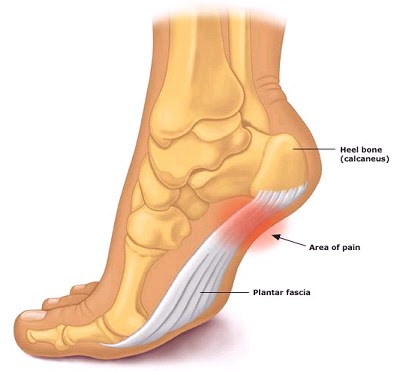
Now that we are into our warmer weather, many of us will take up running outside. One of the common discomforts that can arise with running, indoors and outdoors, is plantar fasciitis. It is the most common cause of heel pain. The plantar fascia is the flat band of tissue (ligament) that connects the heel bone to the toes. It supports the arch of the foot. If the plantar fascia becomes strained, it can weaken, become swollen, and inflamed. This can result in pain in the heel or in the bottom of the foot while standing or walking. It can happen in one foot or both feet.
Plantar fasciitis is caused by straining the ligament that supports the arch. Plantar fasciitis most often occurs because of injuries that have happened over time. Repeated strain can cause tiny tears in the ligament. These can lead to pain and swelling. There are many causes that can lead to this: excessive pronation which is rolling the feet inward while walking; having high arches or flat feet; walking, standing, or running on hard surfaces for a long period of time; wearing unsupportive shoes; and having a tight Achilles tendon. Another common cause of plantar fasciitis is arthritis. Certain types of arthritis can cause inflammation to develop in tendons, resulting in plantar fasciitis. This cause is particularly common among elderly patients. Some patients with plantar fasciitis also have a heel spur, which is an abnormal growth of the heel bone. The heel spur is not the cause of the plantar fasciitis but may coincide with it and cause further pain already induced from the plantar fasciitis.
One of the most common complaints associated with plantar fasciitis is a burning, stabbing, or aching pain in the heel. This discomfort is more apparent in the morning upon waking because the fascia ligament tightens up during the night while sleeping, causing pain to diminish. Although, after rising out of bed and placing pressure on the ligament, it becomes tight and pain is particularly acute. This pain will usually decrease as the tissue warms up, but may easily return again after long periods of standing or weight bearing, physical activity, or after getting up after long periods of lethargy or sitting down.
There are several options for treatment in Western medicine. They include giving the foot a rest bycutting back on activities that increase the pain; avoid walking or running on hard surfaces; icing the heel; using over-the-counter pain relievers; doing calf stretches  (especially when first waking in the morning); using a shoe with good arch support and a cushioned sole; using heel cups or shoe inserts (orthotics).  If these treatments do not help, the doctor may suggest splints to wear at night, steroid shots into the heel, or other treatments. Surgery is usually only suggested if the pain has not subsided after trying other treatments for 6 to 12 months.

Traditional Chinese Medicine (TCM) is a great way to treat the symptoms associated with plantar fasciitis. There are several modalities used to treat the pain associated with plantar fasciitis. These include acupuncture, moxibustion, and Chinese herbs.  All of these are helpful to relieve the pain and inflammation.

Acupuncture is a treatment of using fine, thin needles placed in specific acu-points along the meridians of the body. The meridians are the pathways that the qi (energy) runs throughout the body. If the qi becomes blocked along the meridians, many symptoms can arise-such as pain, insomnia, digestive issues, and many other ailments. Acupuncture, and all TCM therapies, balance this qi and keep it in check-which results in health and harmony throughout the body. The acupuncture needles are placed in various parts of the body and not always necessarily where the symptom is-especially with pain. A diagnosis is made to see where the imbalance of qi is and then that specific meridian is treated. For example, plantar fasciitis pain is in the heel of the foot and the “Kidney” meridian is one of the meridians which runs along the heel of the foot. So, there may be an imbalance within the “Kidney” meridian therefore, the needles may be placed along the Kidney channel which runs up the leg and into the torso. So the needles may be placed in distal areas and will still being relief from the pain.

Moxibustion is a treatment of using a blend of Chinese herbs that are burned over specific acu-points and/or areas that are painful. Moxibustion works in a similar manner as acupuncture in that it balances the qi in the body. It is also helpful in circulating blood throughout the body for nourishment to all muscles, tissues, and organs. The moxibustion comes in several forms but a commonly used form is in a roll that is lit with a flame and once the herbs begin to burn,  the “moxa-roll” is then gently moved over the area of the body as needed. The herbs’ medicinal actions help to soothe an achey muscle and bring more blood to an area that needs nourishment for healing.

Chinese herbs are a wonderful therapy to use for all kinds of pain in the body, including plantar fasciitis. Chinese herbs come in different forms: teas, tablets, tinctures, granules, and powders. They are powerful medicinals that are safe to use with most medications without interfering. Plantar fasciitis includes inflammation of the tissue which is thought of as a “warm” type of pathogen in TCM. Herbs that can help to cool the inflammation and nourish the muscle itself may be recommended to alleviate the heel pain. Specific herbs are also recommended in helping to nourish the blood, as the moxibustion does, but the Chinese herbs are used internally and have a stronger effect. Also, Chinese herbs are helpful in relieving arthritis, which can cause plantar fasciitis pain.

Pain is a symptom that is easily alleviated with TCM and usually results in decreased pain within the first few sessions. Treatment plans vary from patient to patient, depending on their degree of pain, how long they have had the pain, the amount of activity they are involved in, and many other factors. Once the pain symptoms are alleviated, then TCM therapies are used as a maintenance and preventative medicine to keep the plantar fasciitis in check-which leads to a continual flow of balance and harmony of qi throughout the mind, body, and spirit.

Caroline Jung, Dipl. Ac., MSOM

Friday, May 20, 2011

Tune-Up with Acupuncture for Summertime
Summertime is right around the corner for us here in Chicago-finally! We do not seem to have too much of a spring so we usually jump right into summer. Although it may feel like we are still in the winter mode-our muscles may not be as flexible as in the summertime, we may still have the desire to sleep in longer and take naps. So, to help our bodies and souls along with being ready for the change in temperature and environment, we can use Traditional Chinese Medicine (TCM) to prepare ourselves.
We use acupuncture to tune-up the different meridians in our bodies. The meridians are the pathways that carry our qi (our energy) throughout our bodies. Acupuncture points are on each of the meridians. We decide on and choose the points according to any symptom a patient may present with. Although, when we want to just have a treatment to prepare ourselves for a change in the seasons, we choose points according to the meridians associated with the five elements: fire, water, metal, earth, and wood. These five elements also correspond to the four seasons of the year. The specific points help support all of the systems in our bodies to keep us at our optimal health level. For example, for the heat of summertime, we can focus on the heart meridian which is associated with the fire element. By keeping this meridian and its’ energies in check, we can help our odiesto stay cool while working and playing in the heat.


By paying close attention to each meridian associated with each season, we can prevent that energy from becoming affected by pathogens and turning into an illness. TCM can be used in this way as a preventative and maintenance medicine for our health.
Another nice treatment to help prepare for the warmer months is a cupping treatment. Cupping is a treatment using cups, either glass or plastic, to remove toxins and stagnation from our body.


It is easy for our bodies to build up toxins during the winter because cold environments allow for our everyday body functions to slow down. Cold temperatures also make our muscles tighter and they tend to contract more easily. These toxins can create stagnations of energy which results in areas of the body to have too much energy and others areas not having enough. Cupping can release these toxins and allow for a harmonious flow of qi. Cupping is also effective in relieving pain and discomfort-as we often use it to treat back pain.
From a nutritional aspect of TCM, we want to balance our energy with cooler foods and liquids. During the warmer seasons, we can have more of the raw, cold foods such as salads and sushi. This is not to say that we should not have hot tea during the summer, we just do not want to overheat our systems. We are always looking at the yin and yang of foods and how they will affect the yin and yang of our individual bodies and spirits. If we take everything in moderation, our immune and digestive systems will function at their best.
Here is a light and easy recipe for the warmer months:
Summer salad
¼ cup arugula
¼ cup spinach
¼ baby greens
1/8 cup sliced, raw radish
¼ cup avocado¼ dried fruit, such as cranberries or blueberries
¼ cup adzuki beans
¼ cup pistachios
Dressing: mix 3 parts olive or sesame oil with 1 part rice vinegar; add a touch of fresh squeezed orange juice, sprinkle of sea salt, pinch of black pepper, and rosemary until the flavors blend well. Shake all ingredients together and let stand for 10 minutes.
Lightly dress the arugula, spinach, and baby greens with the dressing and top the salad with remaining ingredients.

Caroline Jung, Dipl. Ac., MSOM